The Survival Philosophy of Large Software: Design Wisdom from Complexity to Simplicity
The great Way is simple; great skill appears clumsy. — Tao Te Ching
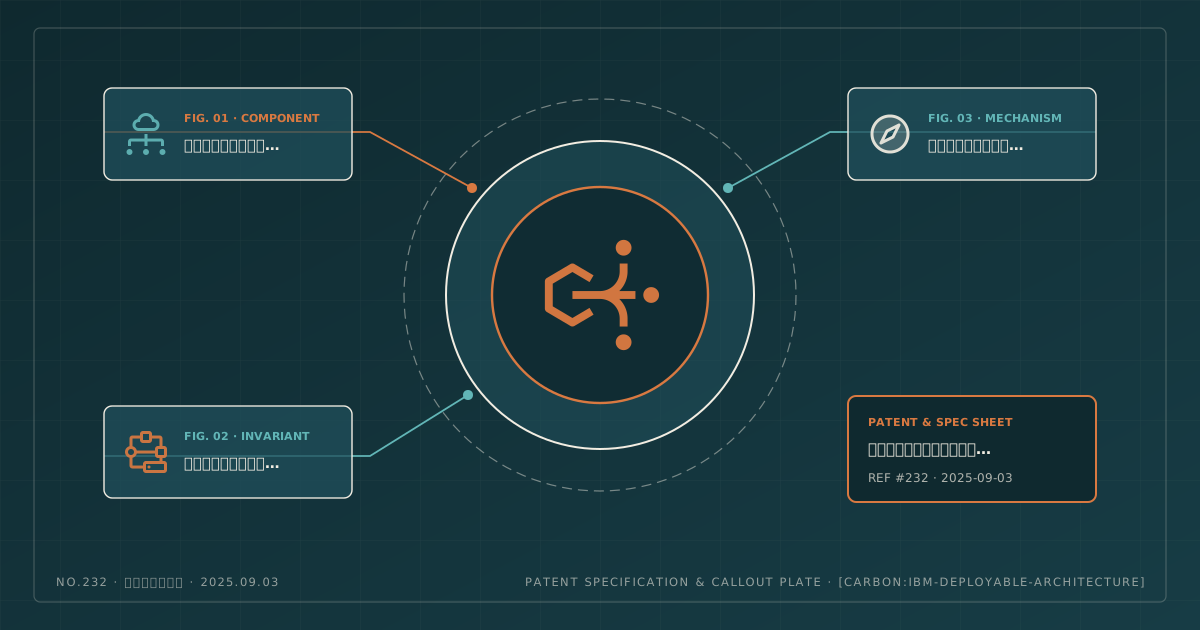
The design of large software should master complexity through simplicity and surpass cleverness through apparent clumsiness. Decompose complex systems into independent black boxes, connect them with clear contracts, and protect them through risk isolation. Do not seek the cleverness of the moment, but enduring stability; do not seek to gather everyone’s effort, but to reduce mutual interference. This is the great wisdom of software architecture: turn complexity into simplicity, and use simplicity to govern change.
Recently I watched a thought-provoking YouTube video, “Architecting LARGE software projects,” whose insights resonated with my own thinking (I am also trying to apply this to AI coding), so I worked with GPT-5 / Opus 4.1 to organize these thoughts into an essay. GPT-5 extracted information, I edited, and Opus 4.1 reviewed.
Every large piece of software should, fundamentally, be something one person can complete independently. At first hearing, this assertion is almost paradoxical: a video editor, a national healthcare system, even flight-control software for a fighter jet—how could systems this complex fit within one person’s cognitive boundary?
But the key is to redefine what “one person” means. The real question is not “how can one person master every detail” but “how can each part be small enough to be fully understood, independently delivered, and wholly owned by one person.” If every component is like a carefully designed black box, conversing with others only through explicit interfaces, are those long synchronization meetings and endless coordination calls really still necessary?
Let us start with a more humble yet profound observation: why do large software projects always move from rapid progress to a halting limp? Early development advances like a breaking wave—why, after a certain threshold, does it start to “drag through mud and water”?
The answer may be more mundane than we imagine: what destroys a project is often not the obvious boulders but countless seemingly trivial grains of sand. A dependency platform quietly changes an API; a compile error traces back to someone else’s “small change”; a core engineer suddenly leaves; a language-version upgrade breaks backward compatibility… Each accident means a context switch, a forced stoppage, a painful repair.
These low-probability accidents, layered atop one another in a complex system, eventually become a high-probability systemic collapse.
Rethinking: What Exactly Are We Optimizing?
When we return to first principles to think about ultra-large software projects, what do we intuitively prioritize? Richness of features? Speed of development?
Yet a truly wise architect will give a completely different order of priorities: durability, extensibility, parallelizability, and long-term stable development speed. Let us turn these abstractions into a more concrete vision:
- Durability: You seek software that survives over the long term; the ideal state is “never breaks.”
- Extensibility: You need a flexible architectural skeleton that can gracefully embrace future feature evolution.
- Parallelizability: You desire a team that can expand naturally—ideally reaching “one module, one person,” with modules insulated from one another, minimizing those coordination meetings that “everyone must attend.”
- Stable speed: You want not a fleeting burst of rapid development but a constant cadence—not a parabola from fast to slow, but a steady horizontal line.
Why must these traits be given the highest priority? The answer lies in an unavoidable reality: change is the only constant in a software lifecycle.
User requirements change; platform ecosystems change (APIs, terms of service, technology popularity); hardware environments change; business requirements change; and most critically—people change too. Today’s star engineer may leave tomorrow, taking all the context in their head. When we accept that “change is the norm” rather than the exception, we are in fact making a fundamental strategic choice for the software’s lifecycle.
Let us run a thought experiment: imagine you are building three completely different things at once—a professional video editor, a national digital healthcare system, and flight-control software for a fighter jet. What do they have in common?
The answer: an extremely long lifecycle.
A fighter jet may soar in the sky for fifty years; a digital healthcare system may serve the health needs of generations; many video editors still in wide use have core architectures dating from the 1980s and 1990s. This observation leads to a plain yet profound inference: you need to choose technology stacks that will still have compiler support, an active ecosystem, and complete documentation twenty years from now.
In a sense, you are clearing mines in advance for your “future self.”
The Time Economics of Quality: Write It Once, or Keep Reworking It?
The video contains a highly insightful line that every architect should ponder: writing five lines of code today is much faster than writing one line today and adding four more five years later.
This judgment seems counterintuitive, but its underlying logic is very clear. Rework is by no means simple “addition”—not simply “+4 lines of code” on the original base. Five years later, you face a completely different environment: the context of that time has long dispersed like smoke; the technical environment has shifted several times; related modules have grown complex branches and leaves.
A seemingly “trivial patch” is in fact a violent shock to your entire cognitive network. And as project size grows, the density of these “small problems” increases exponentially, until your development speed approaches zero.
This is the fundamental reason why “explicit” is more valuable than “clever.” Explicit type declarations, clear module boundaries, defined communication protocols—all information is recorded in the present, leaving the future with certainty rather than a guessing game. On the surface, you are “typing a few more keys”; in substance, you are sparing the future countless painful rounds of “context reconstruction.”
Let us consider a concrete scenario: you are developing a video encoding module, and your teammate owns timeline rendering. Today, to save effort, you decide to expose a “seemingly generic” pointer interface, thinking, “I’ll add a safe wrapper later.”
A month later, your teammate starts depending on your pointer interface; several months later, another colleague writes a translation layer on top of it; half a year later, when you finally prepare to implement that “safe wrapper” plan, you are shocked to find that four different places already depend directly on your “internal implementation details.”
Now you face a painful choice: either “drop the hammer” and break every caller’s code, or keep carrying this technical debt. But if you had spent a few extra minutes upfront to define a “dependable protocol” explicitly, this “soul-searching question” would never exist.
The Philosophy of Technology Selection: Languages Are Risk Vessels, Not Objects of Faith
In technical communities, “which language is best” is always a hot topic. Yet truly mature architectural thinking offers a very different perspective: language choice is fundamentally a risk-management problem, not a contest of technical faith.
Let us look at two instructive cases:
Case One: The Pain of Migrating from Python 2 to 3
The release of Python 3 broke backward compatibility with Python 2. For teams with million-line codebases, this was not a simple “upgrade” but a painful “code migration.” More unsettling: if some hypothetical future “Python 4” again chooses to break compatibility, how would we respond?
Case Two: The Conservative Wisdom of C
The speaker shared his choice: stick with the C89 standard and work on a “Dependable C” document—a carefully designed “dependable subset” of C. The logic is plain but profound: it compiles almost anywhere, it will be around for a long time, and its behavior is highly predictable.
Does this choice look conservative? Perhaps. But for systems that must run for decades, this “sit steady in the fishing boat” temperament may actually be development speed’s best friend.
To be clear: this does not mean only C can realize these architectural principles. You can absolutely implement the same design philosophy in C++, Python, Rust, or any other language. The key is to acknowledge a reality: the language itself is also a “source of potential change.”
When you choose to embrace “trendy” technology, you are also choosing to assume more uncertainty. The real question is not “is the technology trendy enough” but “can we isolate these risks within controllable boundaries?”
The Art of Modularization: Decomposing Giant Systems into Precise Black Boxes
How do we make the seemingly impossible vision—“one person can complete the entire system”—a reality? The answer is both simple and profound: do not turn a person into a superhuman; decompose the system into countless human-comprehensible small projects.
Each small project should be a carefully designed black box: you interact with it only through a clearly defined API or communication protocol; as for its internal implementation details, you neither need to know them nor should you depend on them. The core elements of this design philosophy include:
- Stable contracts: Interfaces must be formal contracts that are documentable, testable, and able to evolve stably.
- Fault isolation: Modules should remain as “insulated” as possible, avoiding the chain reaction where “I change here and everything else collapses.”
- Single responsibility: Each module should ideally need only one owner to keep moving forward, thereby minimizing team coordination costs.
I like to describe this module relationship with a metaphor: treat every module as an independent city-state. Relations among city-states are not conducted by passing little notes through cracks in the wall but by signing formal “diplomatic treaties.” You care about clear borders, explicit rights and responsibilities, and immediately detectable violations. How each city-state governs itself and develops internally—that is entirely its domestic freedom.
A tiny example (to convey the feel of a “black box”):
// media_decoder.rs — A stable Rust-style interface with replaceable internals

pub struct MediaDecoder {
    // Internal fields can be added here
}

impl MediaDecoder {
    /// Open a media resource, returning an Option containing a MediaDecoder; return None on failure
    pub fn open(path: &str) -> Option<Self> {
        // Implementation to open media resource
        // Return Some(MediaDecoder) on success, None on failure
        unimplemented!()
    }

    /// Read the next frame into out_buf and write the size to out_size; return Ok(()) on success, Err on error or EOF
    pub fn read_frame(&mut self, out_buf: &mut [u8], out_size: &mut usize) -> Result<(), String> {
        // Implementation to read the next frame
        // Return Ok(()) on success, Err with a message on error or EOF
        unimplemented!()
    }

    /// Close and release resources; may be called repeatedly but must return safely
    pub fn close(&mut self) {
        // Implementation to close and release resources
        // Ensure it is safe to call multiple times
        unimplemented!()
    }
}
The beauty of this interface design lies in its perfect encapsulation: it leaks no internal data structures and makes no promises about underlying dependency libraries.
The power of this design lies in its future adaptability: you can seamlessly switch the underlying implementation from FFmpeg to an in-house decoder, change storage from local files to network streaming, and no caller will perceive any change. The few lines of “explicit contract” you invest today buy you avoidance of countless painful “forced collateral refactors” tomorrow.
The Wisdom of Risk Management: Active Defense Beats Passive Response
Murphy’s Law tells us: “Anything that can go wrong will go wrong.” Since this is an unavoidable reality, a wise architect should prepare a comprehensive risk checklist. The video explicitly identifies the key factors most likely to change and most likely to bring a project to a halt:
- Platform ecosystem changes: API modifications, terms-of-service changes, shifts in user preference
- Language implementation changes: compiler upgrades, interpreter updates, language-standard evolution—any one of them can break your assumptions
- Hardware environment changes: processor architectures, instruction-set extensions, peripheral interfaces, performance-characteristic curves
- Business requirement changes: this year’s “nice-to-have” may become next year’s “must-have”; priorities are often reshuffled
- Personnel changes: loss of core talent, team restructuring, breaks in knowledge transfer
The key question is: how do you isolate these risks at an architectural layer that is repairable, rollbackable, and replaceable?
The plainest but most effective strategy is to “encapsulate change within boundaries”:
- Is the platform SDK “fragile”? Build a strict adapter facade.
- Does a third-party service “like to change its terms”? Turn it into a replaceable vendor through an abstract protocol.
- Might a new hardware architecture arrive? Separate data processing from computation logic and use an adapter layer to absorb the differences.
Remember an important principle: the larger the system, the more vigilant you must be about “seemingly insignificant small defects.” When enough small defects accumulate, they merge into an abyss that swallows the project.
The Paradox of Speed: Stability Is the True Path to Speed
There is a widespread cognitive trap in software development: equating “fast” with “charging hard.” Yet the true speed of a large project comes from a stable cadence, not explosive sprints.
When your architecture reaches the ideal state—modules are precise black boxes, interfaces are stable contracts, technology choices are conservative enough, and all kinds of change are encapsulated within explicit boundaries—you will be delighted to find that development speed no longer follows a “peaks-and-valleys” volatility curve but becomes a “slow and steady” straight-line ascent.
The essence of this phenomenon is not “slowing down” but a complete escape from the drag of “pointless rework.”
Let us understand this concept through a concrete scenario: suppose you own the medical-records management module of a large digital healthcare system. Today you need to add a new field to the database; tomorrow you must integrate a new health-insurance payment platform; the day after, you must adapt to new hardware.
In a traditional tightly coupled architecture, every change can trigger a chain reaction and stall the project. But if your system is well designed—platform-adaptation logic is encapsulated in a boundary layer, database schema migration tools are explicit and rollbackable, and protocol versioning has a clear evolution strategy—then these “changes” are no longer time bombs that destroy development speed but simply predetermined steps on the production line.
In such an architecture, you will suddenly realize a profound truth: the secret to accelerating a team is not making more people collaborate at high density, but making as few people as possible interfere with one another.
The Core of the Design Philosophy: Make “One Person Can Complete It” a First Principle
The speaker proposed a seemingly radical yet extremely profound idea: any software system should be independently completable by one person. The real meaning of this statement is not to encourage “heroism” or “going it alone,” but to emphasize that any component should be clear enough for one person to fully understand and independently deliver.
This design philosophy brings a fundamental shift in perspective: move the design focus from “how to coordinate one hundred developers” to “how to define one hundred clear module boundaries.” When every boundary is stable and reliable, documentation is complete and trustworthy, and black-box mechanisms can be depended upon, you no longer need to bear enormous team-synchronization costs.
In essence, you are decomposing “one giant project” into “many mutually independent small projects,” each capable of forming its own complete closed loop. This is the essence of true team scalability.
Redefining “Done”: From Feature Delivery to Long-Term Stability
There is also a highly demanding quality standard here: only when you are confident that “no further modification will be needed for years to come” can you declare a module “delivered.”
This standard sounds overly harsh, but it strikes a core pain point in software development—the excuse of “optimize it later.” When you spend extra time today making interfaces clearer, types more rigorous, and module boundaries better encapsulated, you are in fact avoiding being forced tomorrow to revisit code fragments that have long since “lost their memory.”
Why is this forward-looking thinking so important? Because what you need is predictable development speed. Every unexpected rework makes the development cadence evaporate in an instant.
To “consider the scenario five years from now” while programming is by no means impractical idealism; it is the most pragmatic realist strategy.
The Crystallization of Architectural Wisdom: Transformation from Complexity to Simplicity
When you place a professional video editor, a national digital healthcare system, and flight-control software for a fighter jet on the same design table, you will find that they share the same philosophical throughline:
- Not to chase change, but to control change
- Not to worship novelty, but to constrain risk
- Not to concentrate everyone’s attention, but to reduce interference among attentions
This is the highest wisdom of software architecture: reduce the essential complexity of a complex system to a minimum, and encapsulate accidental complexity within controllable boundaries.
Three Questions for Deep Reflection
As you prepare to close this essay, take these three questions into deep reflection:
- Identify change sources: In the system you currently own, where are the “platform / language / hardware / people” nodes most likely to change? Can these potential changes be encapsulated within clear architectural boundaries?
- Redefine “done”: If you raise the “done” standard for the modules you maintain from “feature implemented” to “no modification needed for the next five years,” what design investment would you add today, and what “clever” tricks would you remove?
- Practice modularization: Can you re-decompose your current large codebase into several “black-box projects,” truly realizing the ideal state of “one module, one owner, one explicit protocol”?
Immediately Actionable Steps
If you want to put these ideas into practice starting tomorrow, begin with these concrete steps:
🔍 Risk identification and profiling: Create a comprehensive “system risk profile,” analyzing in detail the sources and frequencies of change across platform, language, hardware, requirements, and people.
🛡️ Conservative technology selection: Define a “long-term dependable technology subset.” Across language features, standard libraries, and third-party dependencies, make explicit which stable choices you are willing to “endorse for ten years.”
📋 Contractualize interfaces: Write a formal “technical agreement” for each module, defining interface specifications, communication protocols, error-code systems, and version-evolution strategies in detail. Turn every “customary convention” into a formal contract “in black and white.”
✨ Make coding explicit: Practice “explicitism” in daily coding. Prefer a few more lines of boundary checks, a few more explanatory comments, and one more layer of abstraction facade, so that your future self avoids painful rework.
Final Maxim
Remember this software philosophy that seems conservative but is in fact extremely radical: writing five lines of present code today is better than adding one missing line of logic tomorrow.
Truly excellent large software systems never gain competitive advantage through “more complex technology”; they win the test of time through “more dependable architecture.”
Only when you successfully “lock” all change inside explicit boundary boxes will development speed truly rest in your hands.
Turn complexity into simplicity, and use simplicity to govern change. This is the highest realm of software architecture.