What I Saw, Felt, Thought, and Understood: On *Unflattening*
A few days ago, with summer nearly over, my wife was getting ready to take the kids back to China and asked if there was anything I wanted her to bring over. It happened that several friends on WeChat Moments had recommended Unflattening one after another, so I looked it up on Douban and was astonished to find that it was a doctoral dissertation presented in comic-book form. I lost no time in asking her to bring a copy back. The night it arrived I read it straight through in one sitting — a whole-body sense of release, like sudden enlightenment, like dew seeping into the heart. It happened that a friend was coming to the US on business, so I asked him to pick up three more copies for me to give away. Shortly after, I ordered two English editions for the company, and then had colleagues back home buy several Chinese copies so we could pass them around.
Two days later I read Unflattening again, and even took my little one through the first two chapters. My wife had borrowed the English edition from the library, but I don’t care to read it — I particularly detest the all-caps lettering that runs through American comics. Clearly the toLowerCase() function in my brain never developed properly.
Here is how the publisher’s blurb introduces the book:
This book is Columbia University’s first academic dissertation presented in comic form — a comic about comics, a graphic novel exploring the relationship between image and text, a visual work that studies visual thinking. Its form, content, and method of inquiry are highly coordinated and unified; the work itself enacts its own theory, guiding the reader — subtly, imperceptibly — to observe, understand, and accept knowledge.
Its scope is broad and its practical significance far-reaching; to understand this book is to have mastered a method for acquiring more knowledge.
The book chiefly investigates visual thinking, multidimensional perspective, and the methodology of acquiring knowledge, while also drawing on research from philosophy, astronomy, mathematics, optics, ecology, literature, art, and many other fields. To read the world the way one reads this book is to help the reader escape the prison of “Flatland,” to overturn ossified, rigid, conventional thinking, and to open up a dynamic, efficient, multidimensional perspective.
From one dimension to many, from Flatland to the vast cosmos, reading this book is like taking an odyssey of the mind, a road strewn with rich knowledge and startling revelations; image and text work in seamless concert to conjure scenes of epic sweep.
This phrasing is debatable. I think it undersells the book.
Having read Unflattening twice, my feeling is this. First: don’t treat it as a doctoral dissertation, or you’ll get hung up on whether stringing well-known ideas together in comic form is rigorous enough, deep enough, worthy of the crown of a PhD thesis. Some Douban reviews fixate on exactly this — truly a case of patching a shoe with a crown, mistaking the branch for the root. Instead, calm yourself; set aside the occasional arrogance of “I know this” and “I understand that”; and, like a child hungry for knowledge, undefended, follow the author’s guidance and — like Alice — plunge headlong down the rabbit hole, to feel the marvelous revelations pouring in along the way. When you close the book, don’t rush to ask yourself what you’ve learned. Let your mind keep flying with the book’s contents; let the bullet fly a while. Two or three days later, read it again, slowly.
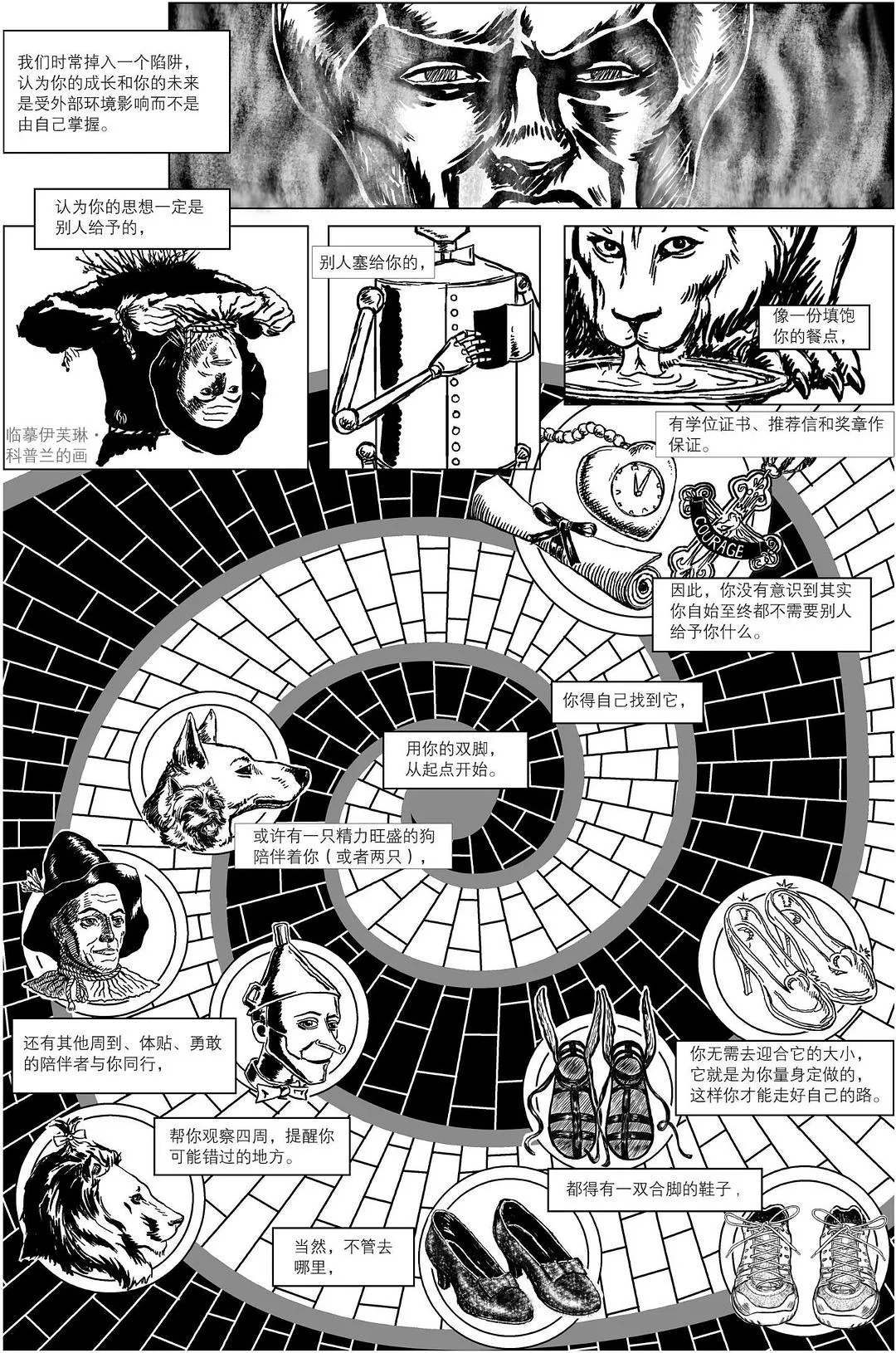
There are books for which, when we finish them, we owe the author thanks: not for how much new knowledge he taught us, but for reawakening the knowledge we already had — just as Steve Jobs said, “connect the dots” — taking what we know but have grown indifferent to, rigidified, left fallow, and stringing it vividly together from a new angle. Not for how many answers he gave us, but for returning us, when we already know the answers, to the question itself, and through the question leading us back into that childhood state of ignorance without fear, asking everything and fearing nothing, so that we might embrace imagination and curiosity once more. Not for pointing out which direction to take in work or in life, but for inspiring us to build our own framework — “wearing custom-made shoes, to see what waits to be discovered along the unique road our own two feet have opened up.”
Unflattening is that kind of book. The last time I had this strange and wonderful feeling was about ten years ago, taking Tal Ben-Shahar’s open course: Positive Psychology, a.k.a. Harvard’s happiness course. That course still influences me today; many of its vivid little examples still come to mind without effort. Thinking it over now, the two share a great deal of familiar feeling — for instance, Tal also said the course is about awakening the knowledge you already have; he also said that whatever you focus on (whatever question you ask), that is what you get. (Perhaps I should revisit that course — after all, as the Master once said, “Review the old and learn the new.”)
As adults, we either abandon our childhood dreams and adolescent passion, no longer hungry for knowledge, no longer curious about the world, shoving all-in on our lives in mediocrity and muddleheadedness; or our ideals get chased around by other people’s glittering lives and astonishing successes, leaving us full of anxiety and resentment — “in love with chasing the beauty of flowers in the mirror, bewitched by greed, anger, joy, disgust, and rage” — one-sidedly pursuing the speed at which we absorb knowledge and experience, in a hurry to turn everything unknown into known, and so we set our senses aside, no longer observing carefully (looking without seeing), no longer listening carefully (hearing without listening), burning through our spirit in the bustle and the gains and losses. Day after day, we become slaves in Flatland, biological batteries cultivated in the Matrix, and then we hand the same attitude toward life down to the next generation.
They once opened their eyes wide, darted about, danced, full of vitality and possibility — and now they have closed themselves off, their field of vision narrowed. This vibrant creature, the human being, ought to have far more potential; yet now it suppresses itself, wears itself out in action, leaving behind only the monotonous “flat.”
So we must act. First we must break free of that invisible string tied around our necks — beginning with breaking the rules.
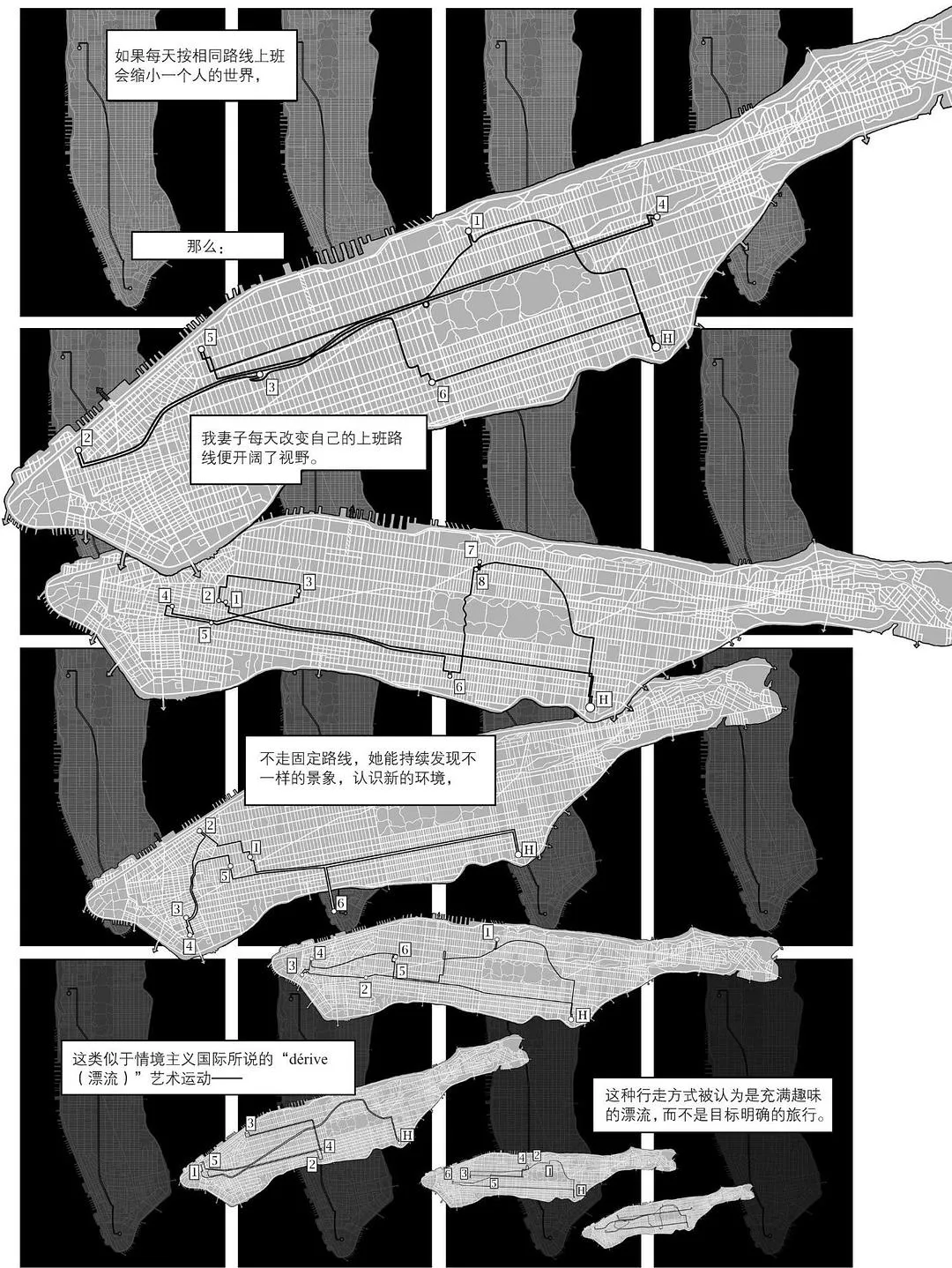
When a stone is dropped into still lake water, the ripples spread; then ripple after ripple from stone after stone interweave and bloom into gorgeous serendipity.
At the same time, we should embrace our own ignorance as much as we can (I don’t know what I don’t know), recover imagination and curiosity, observe and think from another angle — and then another. If you pay attention, there is wonder everywhere in life. Turn on the kitchen tap: why does water come out? This is the question our children ask us, and we take it for granted, blind to it. With a little exploration, we can enter an adventure: water from rivers, lakes, and oceans evaporates and forms clouds in the atmosphere; when the droplets in the clouds grow heavy enough that updrafts can no longer hold them up, rain falls; the rain seeps into the ground, gathers into rivers, and finally either percolates underground or flows into lakes and oceans. The water supply system draws from groundwater, rivers, and lakes, filters it layer by layer, and delivers it to residents through the network of pipes spread across the city; the water the residents have used is treated and returned to the whole cycle. If we keep exploring, we can drive the kids to the reservoir and trace the tap water to its source; we can follow the pipes in our home all the way to the pipes outside the complex; we can even gather a few simple materials and build a model of the water supply system.
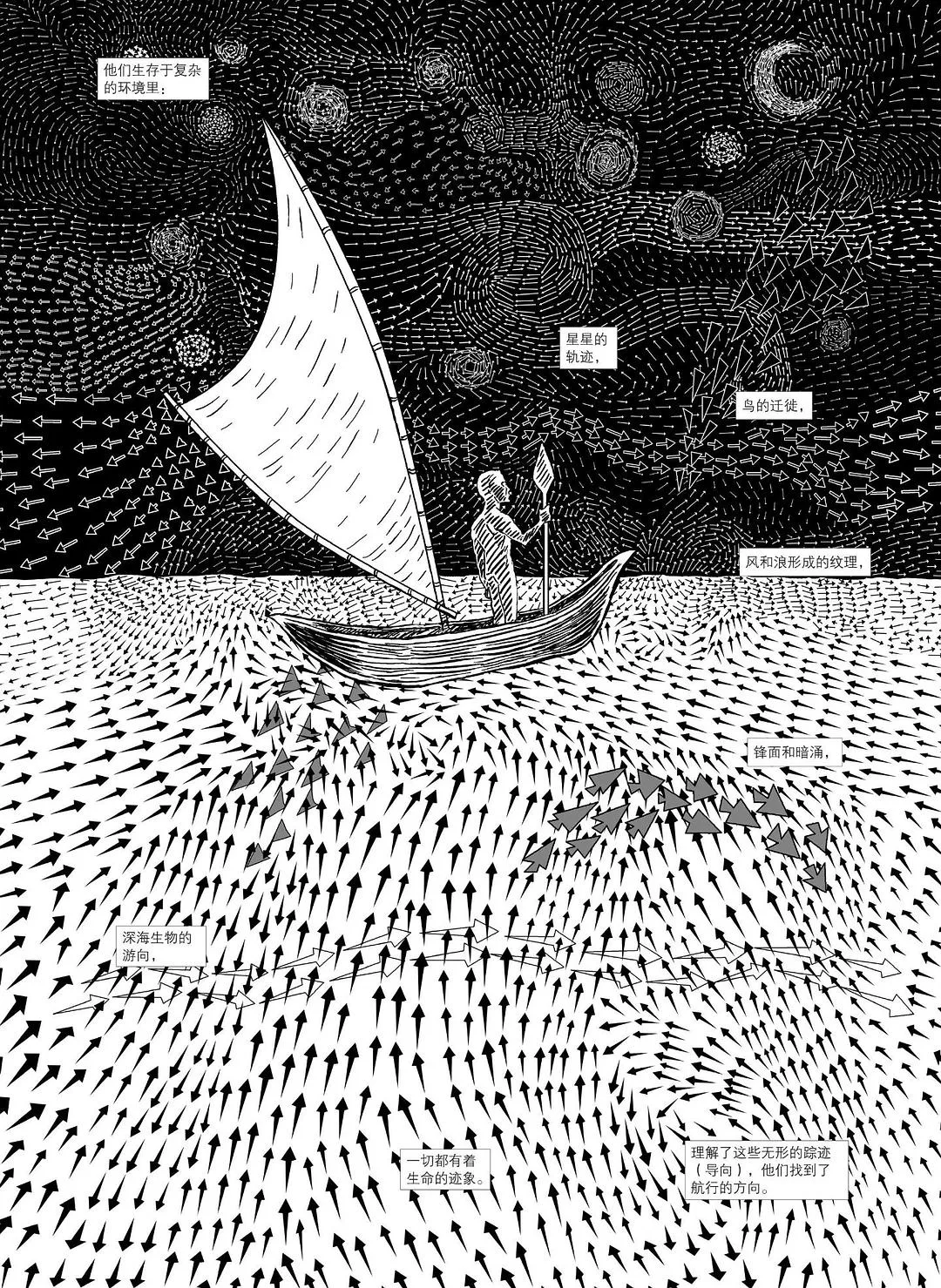
Finally, the hardest part: setting a course.
A Moment with the Sage
Huizi said to Zhuangzi: “The King of Wei gave me seeds of a huge gourd. I planted them, and the fruit grew to hold five piculs. I tried to use it for water or broth, but it wasn’t strong enough to bear its own weight. I split it into dippers, but it was so flat and vast there was nothing it could hold. Not that it wasn’t big and fine — but I had no use for it, so I smashed it.” Zhuangzi said: “You truly are inept at using big things! There was a man of Song who was skilled at making a salve to keep hands from chapping; for generations his family had made its living rinsing silk floss in the water. A stranger heard of it and offered to buy the formula for a hundred pieces of gold. The family gathered and deliberated: ‘For generations we’ve rinsed silk floss, and never earned more than a few pieces of gold. Now in a single day we can sell the skill for a hundred. Let’s give it to him.’ The stranger got it and went to persuade the King of Wu. It happened that Yue had stirred up trouble, and the King of Wu made him a general. That winter he fought the men of Yue on the water and routed them utterly; the king carved out territory and enfeoffed him. The salve that kept hands from chapping was one and the same; yet one man used it to win a fief, while another could not escape rinsing silk floss — because of the difference in how they used it. Now you have a gourd of five piculs. Why not consider making it into a great buoy and floating upon the rivers and lakes, instead of worrying that it’s too flat and vast to hold anything? It seems, sir, that your heart is still stuffed with weeds!”
Huizi said to Zhuangzi: “The King of Wei gave me seeds of a big gourd. I planted them, and when they bore fruit it held five piculs. I tried to fill it with water or broth, but it wasn’t sturdy enough to hold up under the weight. I cut it open to make ladles, but it was so big and sprawling there was nothing they fit into. It wasn’t that the gourd wasn’t big — I just had no use for it, so I smashed it.” Zhuangzi said: “Sir, you really are bad at using big things! There was a family in Song that was good at making a salve that kept hands from chapping; for generation after generation they made their living rinsing silk floss in the river. A traveler heard about it and offered a hundred pieces of gold for the formula. The whole family got together to talk it over: ‘For generations we’ve rinsed silk floss in the river and never made more than a few pieces of gold. Now we can sell the formula for a hundred in one go. Let’s hand it over.’ The traveler got the formula and went to pitch it to the King of Wu. It just so happened that Yue made trouble, and the king put him in command of the army. In winter he fought the Yue forces on the water and crushed them, and the King of Wu carved off land and enfeoffed him. Keeping hands from chapping is the same skill in both cases; one man used it to win a fiefdom, another couldn’t get out of rinsing silk floss with it — that’s the difference in how it was used. Now you have a gourd that holds five piculs. Why not think about turning it into a waist-floater and drifting out over the rivers and lakes, instead of fretting that it’s too big to hold anything? It seems, sir, there’s still a thatch of weeds growing in your heart!”