Paramount, MGM, and Lionsgate

These past two weeks I’ve been busy handing off my work, and my writing has fallen by the wayside. I had started an essay titled “Building an Experiment-Friendly Company Culture,” but I could never get it to satisfy me, and kept revising it on and off. I’ve been in America for nearly a year now, and work hasn’t gone as I’d hoped. Maybe it’s that the big American companies are all relatively laid-back—I simply couldn’t recapture the feeling of working at Juniper CNRD, let alone the blood-boiling excitement of a startup. Having strength and no way to use it is a pitiful feeling. Add to that not winning the H1B lottery, with no door of escape, and I had no choice but to quietly cultivate myself. When Nan Huaijin spoke about Zhuangzi’s “Free and Easy Wandering,” he said: “When a person is young, or when he has not yet succeeded in his cultivation, or when he is so down on his luck that there is nothing to be done, he must sink and hide deep in the water, and not move at all.” That’s more or less the state I was in.
I had assumed that any renewed connection with startups would be years away. But life’s turning points come so suddenly—just as the old saying goes: when God closes a door, He opens a window for you. A friend worked at a startup that had been running for four years and was hiring a VP of Engineering; he recommended me to apply, and we took a liking to each other. Next came the O1A application. After more than three months of hard work, I finally got what I wished for.
I’ll skip over the process and the feelings of the O1 application for now; if people are interested, I’ll write a separate piece. Today I’ll talk about the company I’m about to join, and why I chose it.
My new employer is called adRise. Anyone with eyes can tell its business has to do with advertising. Indeed: adRise builds a series of VOD apps that play premium film and TV content, and makes its revenue through advertising. adRise positions itself like this:
adRise has taken the lead on two fronts: building VOD apps for premium content owners and monetizing them with targeted, measurable, and interactive TV commercials.
adRise’s flagship product right now is its own Tubi TV. It’s a project launched last year, offering users premium movies and shows for free. After more than a year of hard work, Tubi TV has already become the free version of Netflix. In the VOD space, Netflix is indisputably the leader, waving its immense wads of cash each year to buy content rights from the major distributors, while also creating its own content. But users have to pay $7.99–$11.99 a month for Netflix content. For the elite that’s nothing, but for the working masses it’s a bit of a pinch. And there are too many companies built on this business model: want Hulu, that’s another $10 a month; want HBO Go, roughly the same price. Competition is fierce, and one misstep (content that isn’t attractive enough) sends users defecting to another provider. Tubi TV does the opposite: it signs agreements with content providers—giants like Paramount, MGM, and Lionsgate—to obtain content for free, then shares the ad revenue so each side gets what it needs. To put this business model in terms programmers can grasp, it’s the contest between traditional dedicated servers and EC2. The former charges you monthly (or yearly) whether you use it or not; the latter bills you by how much you use (video plays) against how much you collect (ad plays), cheating no one. Wang Hua often says, “He who wins the have-nots wins the world.” Tubi TV’s free strategy meets the needs of a vast working populace who don’t want to spend money but want to watch movies and shows legally. Quite a few Chinese friends around me, after I introduced them to Tubi TV, said the ads were a bit much and the videos a bit old. I figure this is because we programmers live in a middle-class world, with add-ons like the Xiaomi box built in; hop over the wall for a cabbage’s price and we can see the latest Hollywood blockbusters even earlier than America’s elite—so we have absolutely no idea of the hardships of America’s have-nots.
In the current competitive landscape, video giants like Netflix are still a great mountain, while Tubi TV is just a small hill. This gives us plenty of room to grow—we can grow wildly out of a niche. On the other hand, just as telecom giants like AT&T and Verizon, to avoid vendor lock-in, feed Cisco a bite of meat while also tossing Juniper a bone to gnaw on, the big content providers don’t want their content to depend too heavily on a giant like Netflix for distribution—which would strip them of their bargaining power—so they hope for disruptors like Tubi TV to emerge. At the same time, compared with the one-shot deal of content licensing, ad revenue is long-term and predictable, and it also extends the life of movies and shows. In an era when Wall Street values stable, reliable ARPU more than ever, advertising is a good business.
Moreover, content providers have their own pain. Once Netflix and others grow big, they start using their powerful data-analytics capabilities to explore users’ tastes and preferences, and then make their own series—which, for content providers, is like pulling the firewood out from under the pot. When the partner you depend on both makes video (its own flesh and blood) and distributes video (an adopted child), which one it favors is obvious at a glance. Lenovo started out in distribution; after gaining momentum in PCs, under pressure from partners it spun off its distribution business to form Digital China, and focused single-mindedly on dominating the PC market. Netflix may not want to take that road, so in August this year, after the contract expired, Netflix and Epix ended their five-year honeymoon (see “Netflix Is Losing More Hollywood Movies” on Recode). Oh right—Epix is a joint venture of MGM, Lionsgate, and Paramount.
Having said all that, let’s return to the three top distributors (content providers) in the title: Paramount, MGM, and Lionsgate.
In March this year, Paramount signed a content deal with Tubi TV—for free.
Today (November 19), MGM and Lionsgate signed content deals with Tubi TV—for free.
A coincidence? (a knowing smile) History keeps repeating; this is how the game between companies works. Finding the right strategic position matters. If you drink the soup well, you get a bone to gnaw on; if you gnaw the bone in the right posture, maybe one day you’ll get to eat meat.
Cisco’s market cap is $139 billion, Juniper’s $11.6 billion; Netflix’s is $51.6 billion. Silly and naive as this arithmetic looks, it gives us some rough measure of adRise / Tubi TV’s potential. Of course, potential is only potential. Whether it can be realized depends on many factors combined—step-by-step effort, luck granted by heaven, and competitors who keep shooting themselves in the foot. If companies are individual cells in the body of the socio-economy, then big companies’ constant self-destruction is that body’s metabolism, handing nutrients over to startups. Nokia’s thunderous collapse gave rise to a hundred flowers blooming across Finland’s startup scene. As for PAN, the frying-pan upstart that rose to prominence a few years ago—I won’t bring it up; the more I say, the more it brings tears.
Of course, our content isn’t top-tier yet, our user base isn’t massive, our ads aren’t precise enough, and our product has plenty of problems. But once the snowball starts rolling, if we control the angle and speed well and dodge the obstacles, then on the way down the hill, with every turn of iteration we get better and bigger.
Having said all this, you probably understand adRise / Tubi TV by now, and roughly why I’m joining this startup. Those with itchy hands have already opened the site tubitv.com and downloaded the iOS or Android app. Yes—besides those platforms, we also support Roku, Apple TV, Xbox, Samsung TV, LG TV, and a whole host of others, so you can enjoy blockbusters in every corner with a network connection.
We’re aggressively recruiting senior iOS and Android engineers. Friends in the Bay Area—if your heart stirs, get in touch with me.
Doing video means doing it with style. Here’s the team photo:
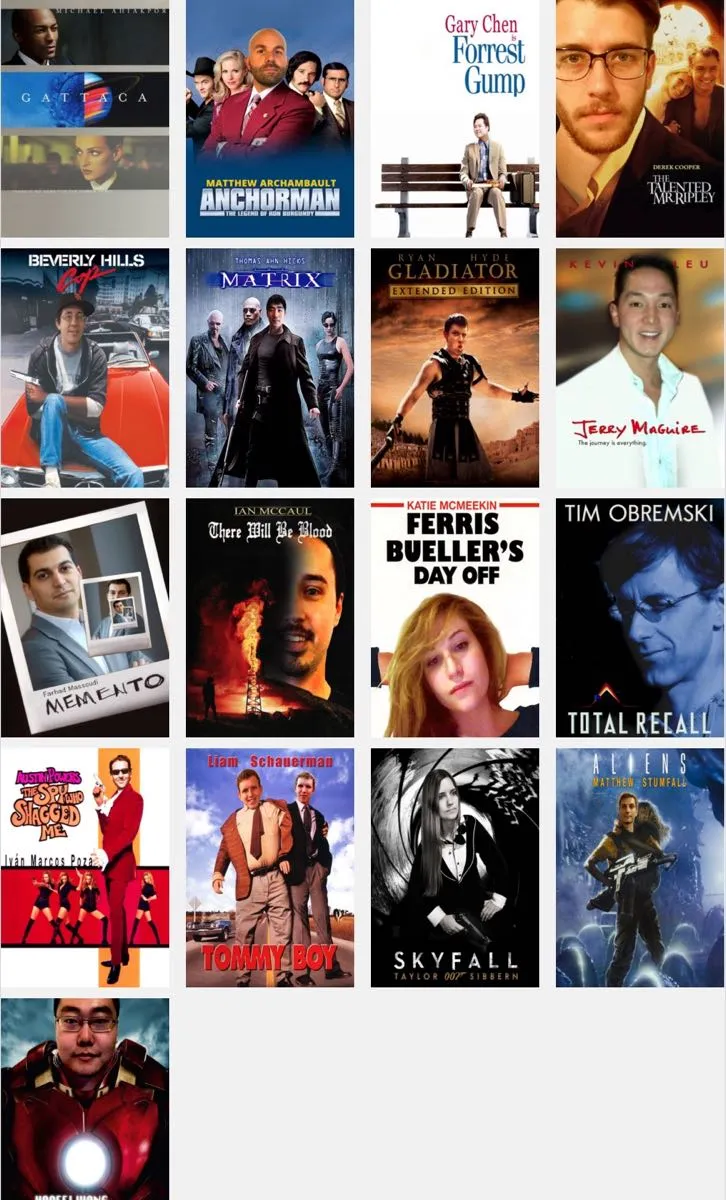
Guess which ones are the programmers. Guess right and you win a code-monkey hug.
On November 19, 2015, we made the blockbuster announcement that we’d signed MGM and Lionsgate. What could be more exciting than stepping back into a startup—and receiving such a generous gift package before I even start?
Ah, right—good news always comes in pairs. Last night I learned that my book, The Tuke Circle Startup Chronicle, is now available for order on all the major sites, including but not limited to: Asynchronous Community, amazon.cn, Tmall, and Dangdang. Just search for “Tuke Circle” (途客圈) on these sites. Interested readers can buy a copy to support this programmer. I’ll keep sharing new journeys with everyone as I go.
One thing to emphasize: all material in this article was collected from the internet; the views are the author’s own and do not represent the official views of adRise / Tubi TV.