Welcome to the Blockchain World
In an article a few weeks ago, I mentioned that I would be leaving the Bay Area, moving to Seattle, and working on things related to blockchain. On that weekend at the end of April, after waving goodbye to my wife and daughters, I drove north alone—with two silent child seats in the back and the company of Ted Radio Hour, the Backstreet Boys, Teresa Teng, and the like—crossed Oregon, and arrived safely at a friend’s home in Redmond. Now that I’ve been officially onboard at Arcblock for a week and have more or less settled in, it’s time to write something.
I know that many friends who care about me will ask: why Arcblock?
Before answering that, there’s a more important question: why blockchain?
Why blockchain?
Let’s first try to lift ourselves out of an individual’s frame of mind and look at the matter from a macro perspective.
First, as an emerging technology, blockchain’s market has already grown too large to ignore. Look at blockchain’s most direct application: cryptocurrency.
The big event in my social feed recently was Berkshire Hathaway’s annual shareholder meeting—people drew closer to the Oracle of Omaha through attending, taking photos, and commenting. As for cryptocurrency, although the attitudes of Wall Street’s old-guard financial institutions are undergoing a dramatic shift as they scramble to enter the market, Buffett at the just-concluded shareholder meeting still held to his negative assessment, insisting that cryptocurrency has no value backing and is bound to collapse. Many of my friends quote old Buffett’s words to remind me of the risks in this industry, while ignoring that Buffett disdains tech stocks just as much. There’s nothing wrong with Buffett’s assessment; in fact, it only corroborates the importance of cryptocurrency. To quote that passage from the “Think different” ad—cryptocurrencies are already a profoundly important force today—“You can quote them, disagree with them, glorify or vilify them. About the only thing you can’t do is ignore them.”
Last week, when I was interviewing engineers and designers, I kept using the following numbers to persuade candidates to look at the whole thing from another angle: the entire cryptocurrency market is now worth $450B (the same size as the stock markets of countries like Russia, Brazil, and Singapore), with daily trading volume of roughly $20B–$25B; if we compare with the world’s second-largest economy, our motherland’s A-shares (Shanghai + Shenzhen), that’s roughly an $8,000B market with $80B–$100B in daily trading volume. So it really can’t be ignored—it’s not something you can sum up with a glib “worthless” or “Ponzi scheme.”
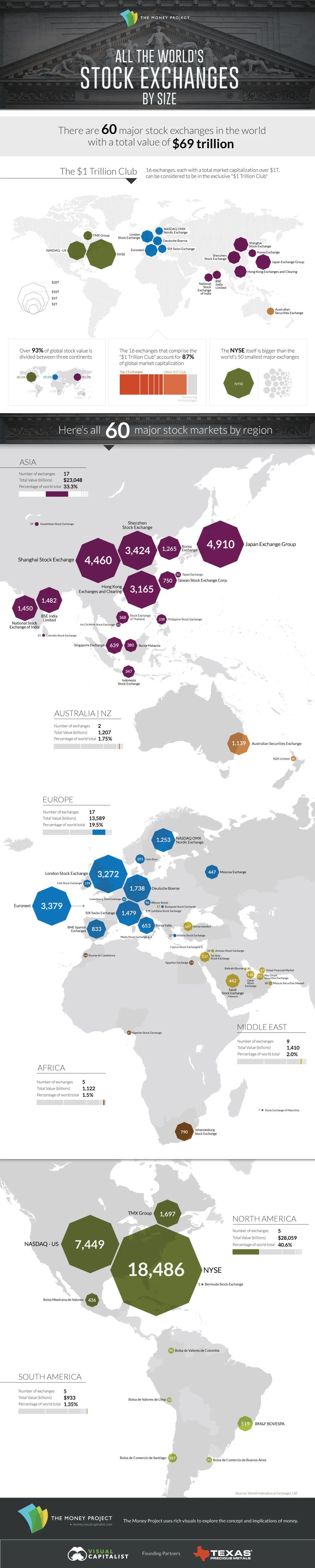 (Market caps of the world’s major stock exchanges)
Second, although blockchain’s current market size—and the market size it can be benchmarked against in the future—is enormous, it is still at a very early stage, like the Wild West of the gold rush, harboring enormous crisis—danger and opportunity.
Everyone here more or less knows or has seen the innovation adoption lifecycle chart:
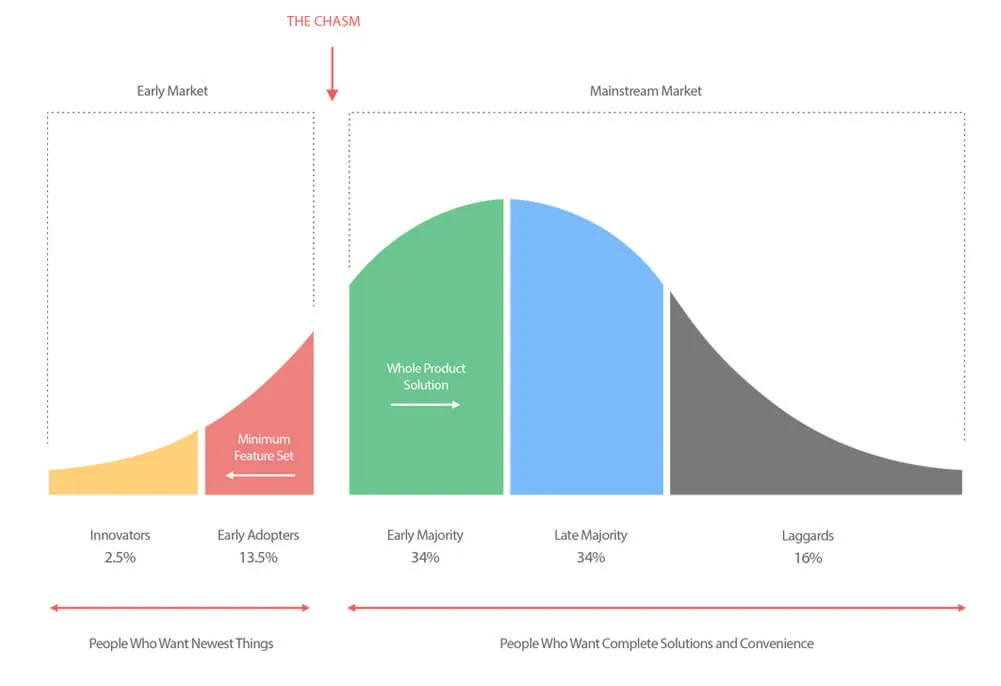
After a decade of development, cryptocurrency’s torch has been passed from the innovators into the hands of early adopters like you and me. We might even say its lifecycle has reached the latter half of the early market—because almost everyone around you knows about it or is talking about it, and quite a few people actually use it. At the same time, precisely because almost everyone is only talking about it while the vast majority aren’t really using it, it isn’t yet in the mainstream market. That means there is still a huge chasm to cross between early adopters and the early majority—what the general public needs are complete, convenient, usable products, not the technology that geeks proudly hold in their hands. Take an example: the auntie at the vegetable market knows you can put money in a wallet and open it when you need to spend it; but when she wants to put Bitcoin in that wallet, she’s stuck—what’s a private key, why on first use must I write down a bunch of strange English words on paper (why the hell can’t they be Chinese?), what’s a wallet address, why do I need to know this string of anti-human digits? I know a transfer costs a fee, but what the hell is a miner fee?
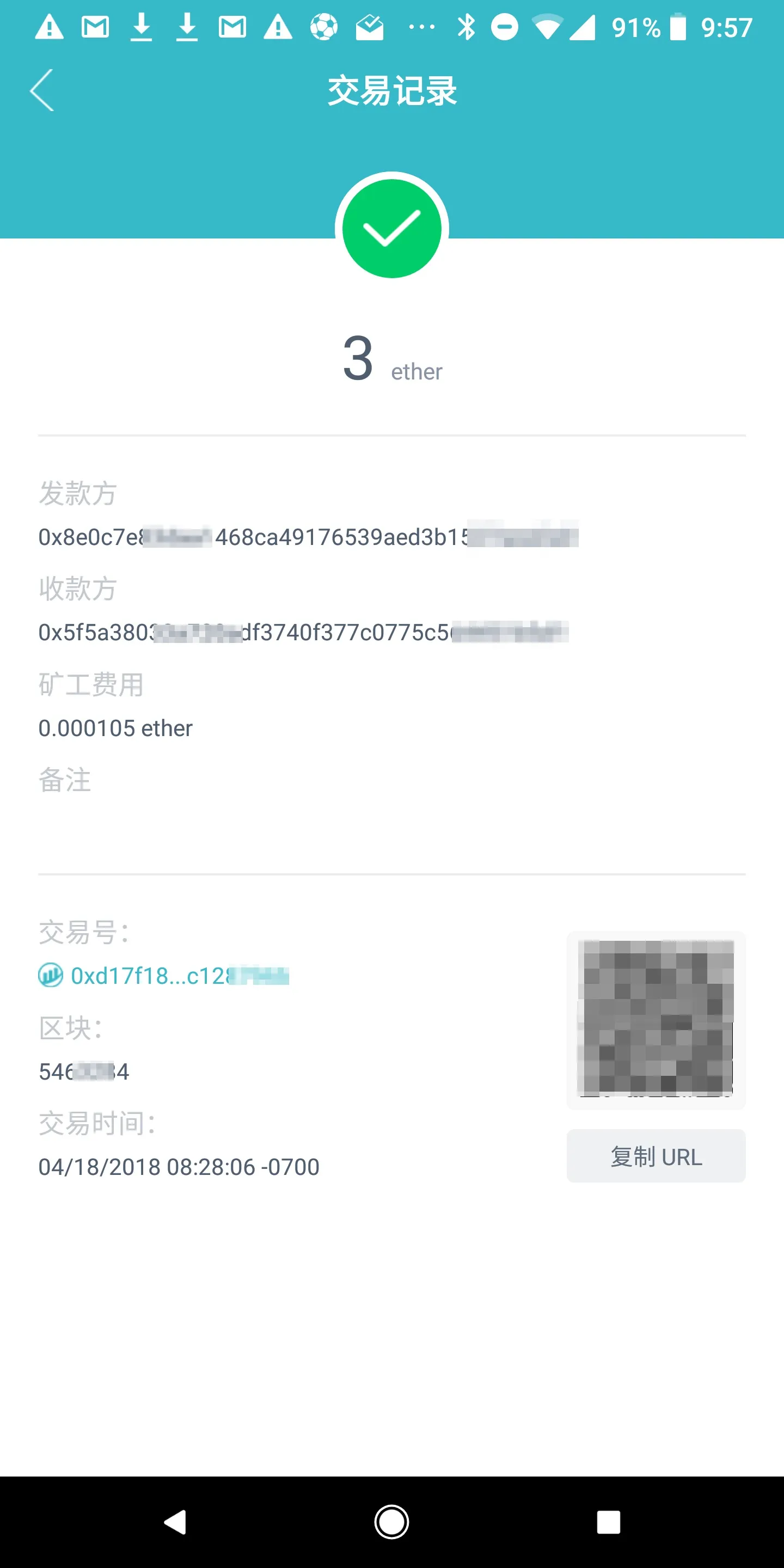
If product problems like these can’t be solved, then this chasm can’t be crossed. This is the product crisis.
Then there’s the trust crisis. The ICOs of blockchain companies are a touchstone of human nature: they place participants inside Westworld, stripped of all constraints and regulations, magnify your inner demons, inflate your desires, and let you run wild as either a white hat or a black hat. Many ICO founders can’t resist the sudden arrival of vast, concealable wealth; they “promise but make no real effort to deliver,” or simply abscond with the coins, leaving the whole circle in a foul mess and inflicting enormous harm on those devout early adopters—triggering a crisis of user trust. In a traditional startup, even with a massive round of financing, there are constraints on when funds arrive, a board restricting spending, monitoring of finances by the banking system, and so on, so the risk of a founder “absconding with the money” is quite small. In the blockchain world, what’s being weighed is the conscience of founders and their teams—and that is a very dangerous thing.
When products fail to develop in line with participants’ expectations of the future, and the market simultaneously loses confidence in blockchain companies’ habit of “promising but making no real effort to deliver,” the whole industry may face a major crisis—something like a repeat of the dot-com crash at the turn of the millennium. Then the industry rises from the ashes: the Webvans of blockchain fall, and the Amazons rise.
Of course, what we’d rather see is blockchain companies focusing on products, continuously innovating and iterating to move the whole market toward the early majority, while also solving—through organizational form—the problem of trusting the operators, that is, the people, so that the industry develops more healthily.
Third, it’s worth noting that blockchain is currently the biggest tailwind (风口), and this tailwind has already lasted more than a year and will likely continue. The past decade-plus of the internet has taught us that standing on the crest of the wave itself grants you extra competitiveness. I’ve mentioned in previous articles that sustained topicality is an important unfair advantage. Comparing the growth curves of Google and Microsoft over the past decade, I deeply feel what an enormous advantage “being paid attention to” is, and Google has made the utmost use of it—Google’s once-beloved talking points were “do no evil,” Gmail’s unlimited storage, Google Doodles, and the now-defunct Google Glass—saving Google a great deal on product promotion and brand building and enabling faster growth.
Lei Jun, the head of Xiaomi which is about to IPO, summarized it as the “flying pig theory”: when the tailwind comes, even pigs can fly. It’s been further elaborated as: go with the trend—choosing is more important than effort; don’t use tactical diligence to cover up strategic laziness.
From the perspective of an industry tailwind, the blockchain-related field’s ability to generate buzz even greatly surpasses that of its predecessors—IoT, ML/AI, self-media, O2O/OMO, the mobile internet, Web 2.0, and so on. It has always been the center and focus of people’s conversations, which means a product can win unusual and extraordinarily patient attention at very little cost. Many projects—our own Arcblock, for instance—have no publicly visible product to speak of, yet already have a group of loyal fans who keep watching and cheering. This is truly an opportunity history has handed to our generation.
From the perspective of a technology tailwind, blockchain combines many existing technologies, standing on the shoulders of giants to create today’s breathtaking technology, making other technology fields pale by comparison. A technology tailwind means patents and papers—while AI/ML’s summit is already covered in red flags, blockchain’s summit is still bare. For those of us who work in technology, this is a generous gift from heaven.
Why Arcblock?
I very much appreciate Uncle Zuolin’s further discussion of the flying pig theory:
The first level: what kind of tailwind counts as a tailwind? The second level: you bet on the right tailwind, the tailwind comes, and when even chickens and dogs rise to heaven, why do you rise the fastest? The third level: when the wind stops, why don’t you fall? What exactly are your core business and your core moat? Everyone holds in their heart the wish that a good wind lend its strength and lift them to the blue clouds—but why should it land on you?
This was actually the focus of my discussions with Arcblock founder Laomao before I joined—along, of course, with our assessments of each other’s character, how well our personalities fit, our understanding of culture, and so on. Laomao and I have known each other for a long time; in my essay “Serendipity Is Destined,” the word “serendipity” was one he introduced me to. This time we’re continuing the bond. We see eye to eye on many principles of how to do things—Ray Dalio’s Principles was also a book he recommended to me. We share some common views:
- Be as transparent as possible inside the company.
- Care for users and continuously earn their trust and affection.
- Let everyone participate in building an ever-evolving good culture.
- Recruit excellent people with potential, develop them, and empower them.
- Keep learning and improving.
- Establish and continuously refine our methodologies.
So what tailwind is Arcblock betting on? The opportunity for products and tools within blockchain’s four-hundred-billion-dollar market cap.
The first direction is products and applications built around holders and creators of digital assets—how to divide the pie that already exists. The opportunities are:
- Cryptocurrency exchanges. This is currently Binance’s stage, and soon traditional exchanges like Nasdaq will arrive as well. Perhaps in the future DEXes (decentralized exchanges) will become an important, even dominant, force.
- Digital investment banking. If the ICO corresponds to the IPO, then who will be the Goldman Sachs of the blockchain era? Morgan Stanley?
- Digital investing. If we treat tokens as assets, then who will be the Fidelity or Bridgewater of the blockchain era? Who will help users manage digital assets and build an appropriate cryptocurrency portfolio that preserves and grows their value?
Binance’s $10B daily volume already rivals the stock exchanges of small and mid-sized nations—enough to make the point. And if you could become the Bridgewater and Goldman Sachs of the blockchain era—just thinking about it makes your mouth water.
The second direction is using blockchain to replace existing solutions. There are several opportunities:
- Decentralized fintech. Fintech is perhaps the most mature application area besides exchanges—Ripple, for example.
- Anti-fraud. There are many opportunities in e-commerce, P2P lending, crowdfunding, and similar areas.
- Data preservation. There are opportunities to acquire high-quality users in intellectual property, certificates, identity, supply chains, and user loyalty-point systems, among others.
- Smart contracts and distributed applications (Dapps). This is the area with the loudest noise, the most dilution, and the highest attention—yet apart from CryptoKitties, there seem to be few substantive applications. This area needs sufficiently good thinking and sufficiently mature infrastructure before results come more easily.
- Micropayments / peer-to-peer payments. This is a very important direction, but with my limited imagination I find it hard to see what micropayment scenario would require replacing WeChat Pay with blockchain.
The third direction is building a better, more technologically advanced, faster public chain that makes applications easier to build, to replace the “slow” and “buggy” Ethereum. This direction has a huge market, and success means dominating the world—but it’s also an extraordinarily crowded red ocean. Nearly 90% of blockchain companies position themselves as a better public chain, and the result is that one general’s success is built on ten thousand bleached bones.
The fourth direction is about breaking down the fence that keeps blockchain a preserve of tech geeks, making the technology more broadly beneficial—how to expand the boundaries of this pie. This is the direction Arcblock has its eye on. It offers the following opportunities:
- Build blockchain products usable by the auntie at the vegetable market (the wallet app will inevitably be first), letting “the swallows that once nested in the halls of the noble now fly into the homes of ordinary folk.”
- Build products that serve companies in the first and second directions, becoming the Levi’s at the side of the gold miners.
- Build products and an ecosystem that bridge the real world and the blockchain world—so that app developers can simply embed an SDK or call some APIs to use the various capabilities of blockchain—and developers don’t even need to know that blockchain tech exists. It’s like how app developers almost all use HTTP to carry data over the network: which app developer needs to read RFC 2616 / RFC 7540? Blockchain tech will eventually need to reach this stage.
Items 2 and 3 here are Arcblock’s opportunity. Arcblock chose this direction entirely from the user’s point of view, because history has repeatedly proven that for a technology with real use cases to enter the mainstream market, being simple, easy to understand, and good to experience is the minimum requirement—and simplicity for the user is a hard problem for the developer, sometimes an insurmountable chasm. Arcblock’s moat will be our deep understanding of the needs of the users in 2 and 3, our internal capability to deliver services, our ability to rapidly deploy nodes, our blocklet auto-scaling capability, and the innovation and learning capability we’ve built while pursuing the right direction and the right path—these are all the parts beneath the waterline, the capabilities that will let us keep moving forward after the wind stops.
And so—our vision is: to focus on our customers’/users’ needs for blockchain technology and become the AWS of the blockchain world. (Still under deliberation)
Our mission is: by providing a wide variety of tools, to make blockchain technology easy for any company, developer, and individual to use. (Still to be refined)
And in the employee handbook we’re currently compiling, our values are explained like this (a work in progress):
Our values are made up of a set of principles. In later parts of this handbook, we will devote a great deal of space to introducing and discussing these principles. The most important of them are:
- Whether you are a frontline employee or a department manager, we are all leaders of Arcblock, and we have a responsibility to constantly pursue excellence.
- Keep it simple. Simple interpersonal relationships, simple organizational structure, simple workflows.
- We act according to principles. Our working principles are compiled and confirmed together by the team. If you find that an existing principle is missing or no longer applicable, the person concerned has a responsibility to submit a PR to add or update it.
What Do I Do at Arcblock?
I joined Arcblock as VP of Engineering. In my first week at Arcblock, I got a few things done:
- Culture: discussed and drafted the company’s vision, mission, values, and principles of how we work together with Laomao. We launched a rough internal website, handbook.arcblock.io, which every employee can view and participate in shaping the culture (just send a PR; once merged it goes live automatically and generates a PDF). When it matures enough, we’ll very likely open-source it.
- Hiring: a large number of interviews. I spent a fair amount of energy on it, pitching blockchain and Arcblock much like the content of this article.
- Developing people: building our internal bootcamp; we launched a training website, bootcamp.arcblock.io. Over the past week we’ve already held five internal sharing sessions to get the team on the same page as much as possible.
- Reshaping the development process: combining what I learned at Tubi with Arcblock’s existing processes to build a more PR-driven / review-driven / automation-driven workflow.
- OCAP: discussion and design of Open Chain Access Protocol, plus the technology selection and design of ocap-service.
- Refactoring Arcblock’s infrastructure. We’re starting to embrace IaC (Infrastructure as Code)—technically speaking, this was the most important project I took part in during my last few months at Tubi. We don’t yet have Tubi’s manpower, so we can only use the community’s strength smartly, leveraging open source to build better IaC.
- Participating in discussions about Arcblock’s other products.
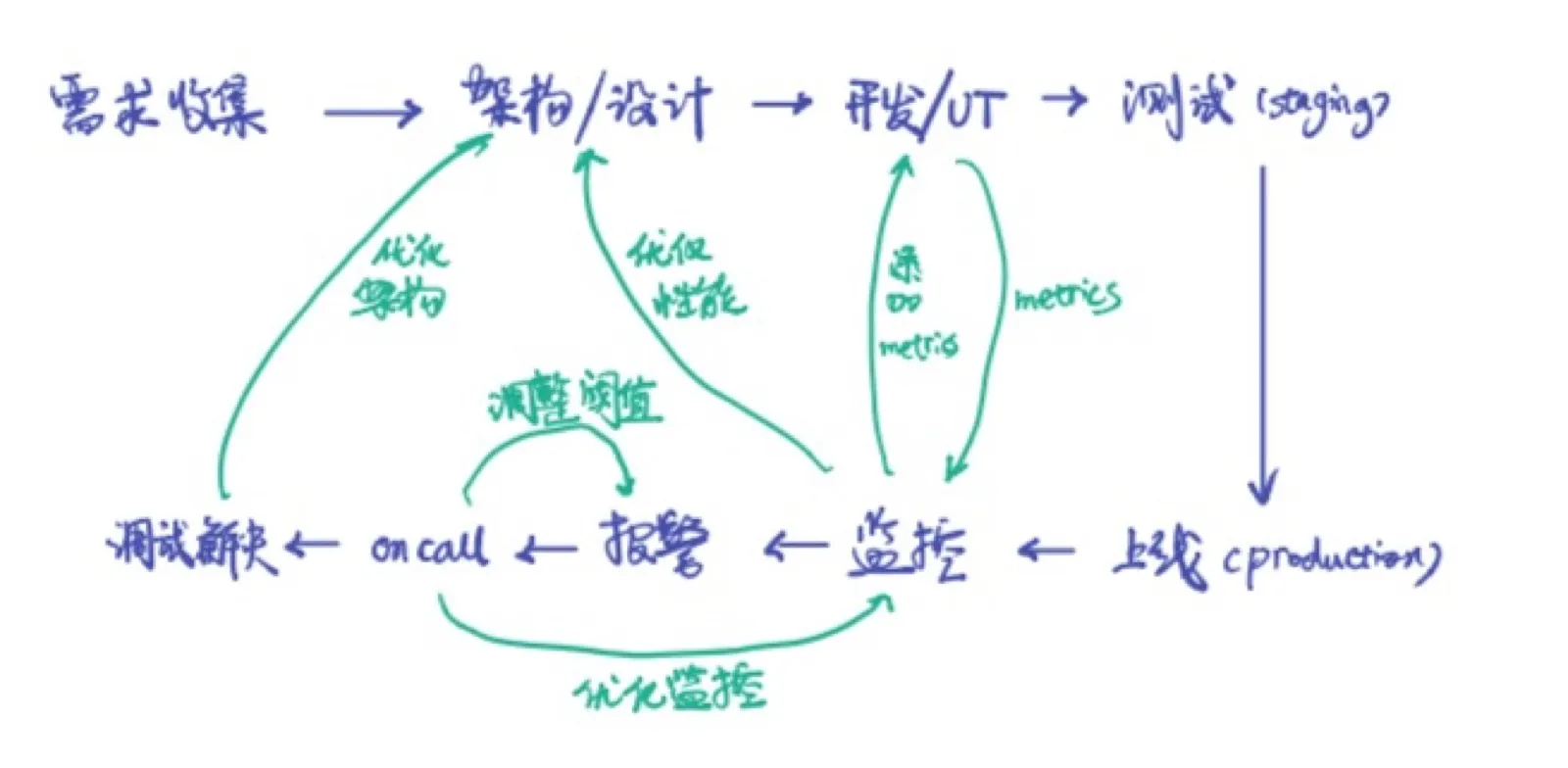
Going forward, these efforts will continue, and the various architectures will gradually come onto the agenda. I’ll be dealing with vendors of various SaaS services, building out the full set of capabilities needed for the whole system from development to on-call, so that every engineer is capable of delivering end-to-end solutions:
We Want You to Join Us
Yes, we’re hiring aggressively. The following teams are recruiting heavily (all currently reporting to me):
- Design team: designing everything for Arcblock from the VI and design language all the way to the UI/UX of specific products. We’re currently hiring 1 Sr. UX designer and 1 Jr. UX designer.
- Requirements: good product sense, a design style that meshes with client engineers, and solid hand-drawing skills.
- Infra & service team: responsible for IaC, OCAP, the API/msg gateway, the blocklet framework, the backend of Arcblock services / management console, the billing system, and the marketplace. We’re currently hiring 3 Sr. Software Engineers and 3 Jr. Software Engineers.
- Requirements: know at least two programming languages, love software development, and are willing to deliver end-to-end solutions (the entire loop from requirements analysis to design discussions to development/unit tests to deployment scripts to launch to monitoring to resolving user issues). Experience with functional programming / Erlang / Elixir is a plus.
- Client team: responsible for developing the web site, management console, billing system, marketplace, iOS / Android apps, and internal systems. Currently hiring: 3 Sr. web frontend engineers, 2 Jr. web frontend engineers, 1 Sr. iOS engineer, and 1 Sr. Android engineer.
- Requirements (web): familiar with webpack and the basic frontend toolchain; solid development ability with one of React/Vue/Angular and no bias against the others; willing to use any framework; able to develop a complete SPA independently. Experience with Electron is a plus.
- Requirements (mobile): familiar with the HCI of the relevant platform and the various mainstream open-source frameworks; able to independently build a beautiful app. Experience with Swift / Kotlin is a plus.
- Data team: works with me to build Arcblock’s analytics data pipeline and ETL, handle core company KPI metrics and A/B testing, and foster a culture of data-driven decision making within the team. Currently hiring: 2 Sr. Data Engineers.
- Requirements: able to use Python / Scala to analyze and process data, build data pipelines with open-source projects or third-party services, and write basic machine learning models. Experience with tools like Airflow / Redshift / Athena is a plus.
All the Jr. positions above welcome new graduates and interns who can commit to a long-term internship and are interested in staying on. In China we’re also hiring experienced leaders who can take on any of the roles above; more than 70% of the work is hands-on technical work, except that in the future you’ll share with me the responsibility of nurturing and managing the team in China.
All positions require:
- Caring about users, loving product development, being willing to listen to users’ voices, and being able to proactively keep improving the user experience (for backend engineers, the client engineer is your user—interface and latency are about your user experience).
- Good aesthetic judgment, a strong urge to fix things that aren’t beautiful enough, and design or code fastidiousness (you can’t tolerate sloppy code, vaguely named variables, unreasonable spacing and font sizes, etc.).
- Valuing fundamentals and paying attention to detail.
- Learning fast and staying hungry for new technology.
- Being easy to communicate with and willing to share knowledge.
- Being able and willing to think through problems and solve them.
- Being willing to grow and able to take on development across a variety of projects within your areas of interest.
Because we completed our fundraising back in January this year (37,500 ETH), our funding reserves are solid, and the bulk of these funds will go into building our products and services—that is, into R&D. We’ll offer a competitive package and benefits, and as a member of the founding team, your horizons, your network, and your circles will have the chance to expand enormously. We’re building our own new-hire bootcamp in the mold of Facebook’s, so your knowledge base gets comprehensively expanded (the blockchain content at github.com/tyrchen/unchained is only a part of it), and weekly BBLs keep your knowledge abreast of your colleagues’ and of the times. Beyond all the internal learning opportunities, we’ll also provide opportunities for conferences, training, and courses, so you can grow quickly in your career at Arcblock. We’re building our unique employee handbook, similar to what Ray Dalio did at Bridgewater, so you’ll have a chance to take part in revising the very first version.
For the teams in the US and China, travel will be unavoidable, and in the future it won’t be limited to China and the US, because blockchain naturally embodies all the elements of globalization.
For the China team, we’ll also complete the setup of our WOFE (wholly owned foreign enterprise) as soon as possible, making a physical move to the other side—on an L-1 visa—one of your options.
We don’t require 996. Most of the time, nine to six is all you need—we firmly believe you need time to learn in different directions, time to enjoy life, and time to be with your family. We hope the work gets done during the day, so you don’t have to come home late full of guilt to a partner in a bad mood—trust me, for young couples, that’s not a good thing. But when you work, we need you to focus and make good art. As the great UCLA coach John Wooden told his boys: make each day your masterpiece.
Finally, all positions except the design team have openings in both the US and China, with no regional cap. In the US, the workplace is the center of the universe, Bellevue City Center (no remote—look, even I crawled over from the Bay Area). In China, the workplace will soon be arranged at the true center of the universe, Wangjing, Beijing (Wangjing SOHO, Alpha Commune, or somewhere else—TBD). Friends in Shanghai, please forgive me: after consideration, we felt Beijing is better suited to finding the talent we’re looking for. Likewise, we’re not considering remote in China for now.
If you’re interested and willing to come work at Arcblock in Seattle or Beijing, please send your resume to career@arcblock.io, with a subject line that states your name, the position you’re applying for, and “程序人生” (e.g., subject: Tian Chen - Sr Web Frontend Engineer - 程序人生). We’ll prioritize it.
In early June, I’ll be back in China, and I hope by then I can work and study alongside the folks in Beijing.
Zen Moment
Success is peace of mind attained only through self-satisfaction in knowing you made the effort to do the best of which you’re capable. Regarding success, others cannot judge you; it’s like character and reputation: your reputation is what you’re perceived to be; your character is what you really are. And what you really are is much more important than what you’re perceived to be.
- John Wooden, The Coach, UCLA, Ted Talk “The difference between winning and succeeding”